
Blog
Embroidery and Beading Repairs: Restoring Delicate Details
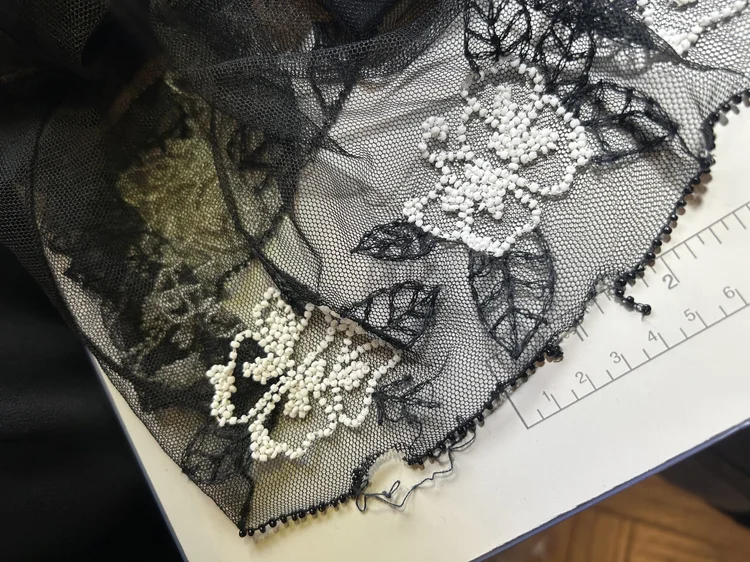
Embroidery and beading are not decoration glued to a dress. They are part of the cloth’s structure. When a bead-line breaks, the surrounding stitches loosen and the ground fabric starts to gape. When a thread of embroidery snags, a whole motif can unravel. Machine-stitching over the damage usually makes it worse: the foot crushes beads, the needle chips sequins, and the repair sits as a hard ridge. The work has to go the other way — remove what is unstable, restabilise the ground, and rebuild the pattern by hand so it continues the original rhythm.
Reading the damage
First we look at whether the loss is local or systemic. A few missing beads along a hem after a hem has been lifted is a local job: we salvage what we can, match colour and size, and re-sew the line. A bodice whose net has torn under the weight of pearls is structural. The beads have to come off a wider area, the net or organza is patched or replaced, and only then are the beads returned. Trying to stitch beads back onto a torn ground is how repairs fail a week later on the dance floor.
Matching is half the skill. Vintage beads oxidise; modern plastic beads sit next to glass with a different lustre. We keep mixed lots for this reason, and we will tell you if a perfect match does not exist. In that case the honest options are to redistribute original beads so the eye reads an even field, or to change a small zone so the new beads look intended. Embroidery has the same problem with thread. Rayon, silk and polyester catch the light differently. We test on the reverse or on a hidden seam before committing to the face.
How the repair is done
Beads along a new alteration seam are always removed before the seam is sewn. After the seam is finished and pressed — carefully, with the beads protected — they are sewn back so the motif crosses the seam rather than stopping short of it. Loose couching is re-anchored. Sequins that have shattered are replaced individually; a whole new strip is used only when the original row is too damaged to read. The client should expect this to take time. A beaded hem cannot be turned up like a cotton skirt, and a quote that pretends otherwise is not a bargain.
Bring spare beads if the maker packed them with the gown, and bring photographs of the dress when it was new if the damage is old. At Altbes we treat beading repairs as conservation as much as alteration: the aim is that the dress can be worn again without the repair announcing itself in photographs or under evening light.
Related posts
Garment Copying: Recreating a Beloved Piece of Clothing
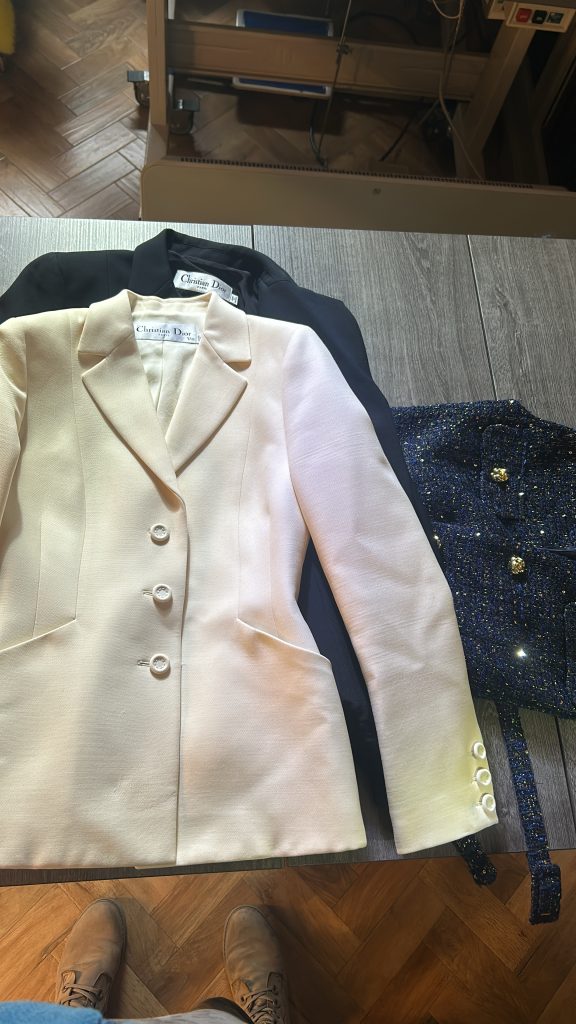
A garment copy rebuilds a favourite piece from the original as a pattern. It is not a shortcut around design, and it is not a counterfeit of a label.
The Case for In-Home and In-Hotel Fittings
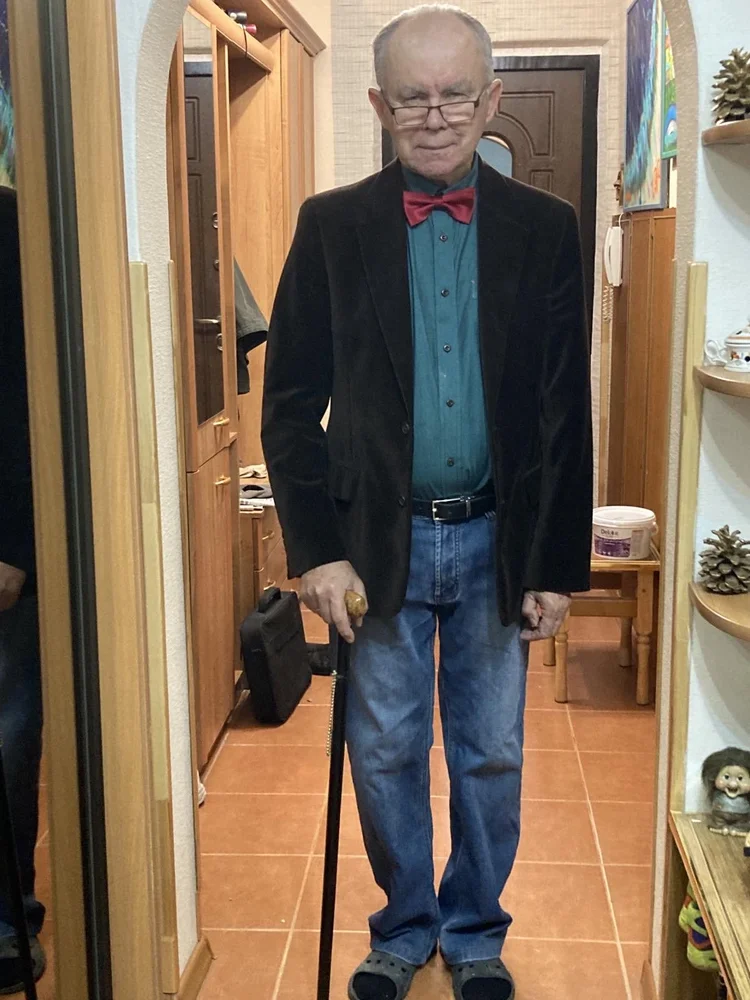
In-home and in-hotel fittings bring the atelier to you when travel, privacy or a packed schedule make a studio visit difficult.
When You Need It Fast: How Expedited Alterations Work
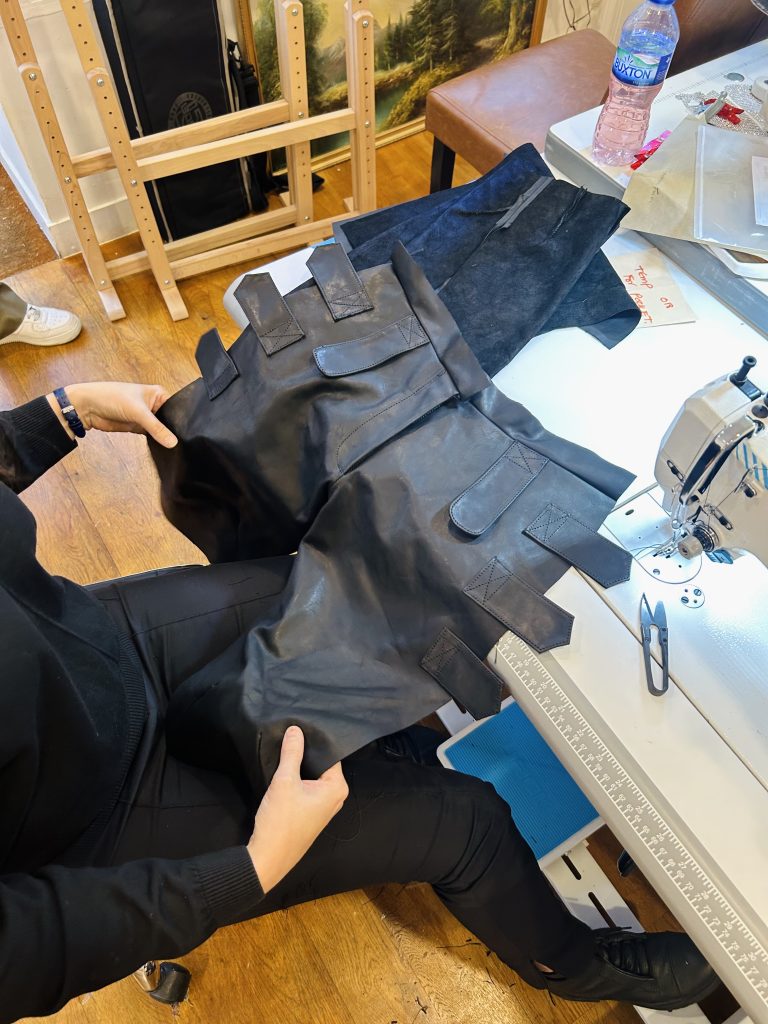
Expedited alterations are possible when the construction allows it. Here is how we plan urgent work without lowering the finish.