
Blog
A Guide to Hemming: Trousers, Dresses, and Everything In Between
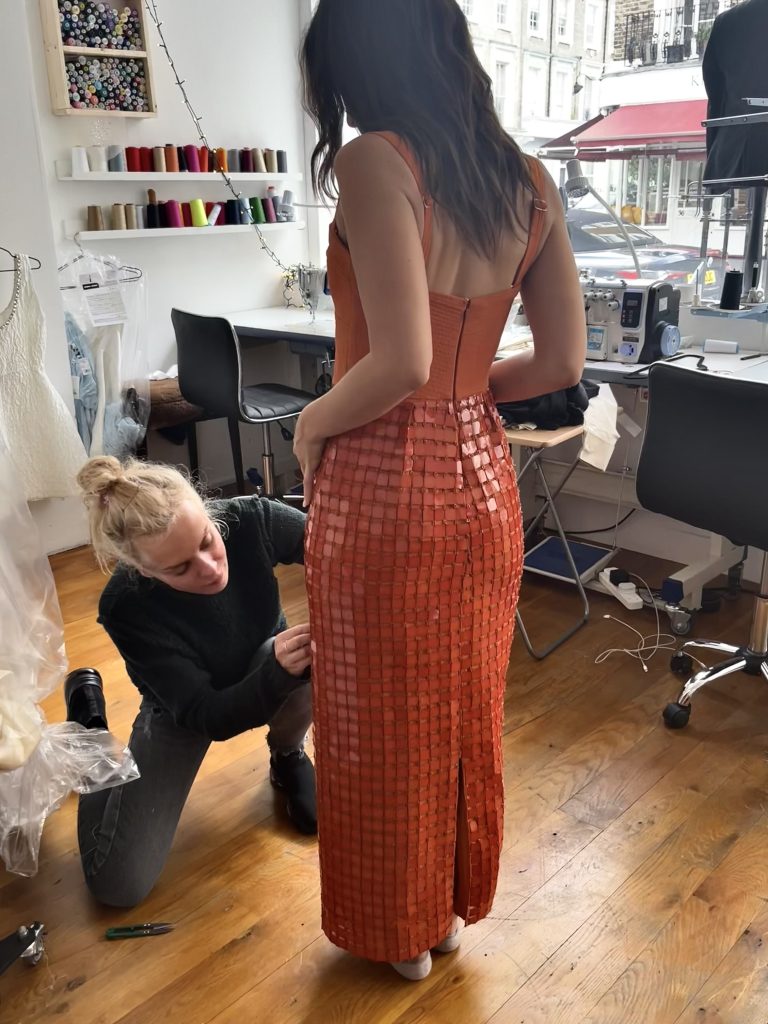
Hemming looks like the simplest alteration in the workshop, which is why it is so often done badly. A hem is not only a measurement from the floor. It is a decision about how the cloth should break, how the original finish should be preserved, and whether the garment will be worn with one pair of shoes or several. Trousers, day dresses and evening gowns share a needle and an iron, but they do not share a method. Get the method wrong and the new edge shines, twists, or comes undone in the wash.
Trousers and the shoe
Trouser length is set to the shoe, not to a number on a tape. A tailored wool trouser usually wants a slight break on a leather oxford and a cleaner line on a loafer. Jeans and chinos can be shorter. We mark the length with the shoes on, then look at both legs — many people stand with one hip higher, and a hem that is even on the table will look crooked on the body. Original hems on jeans can often be reattached so the faded edge stays. Blind-stitching a wool trouser keeps the stitch off the face. A machine topstitch on a dress trouser will look like a factory second unless that is already the finish of the pair.
Letting a hem down is a different job from taking it up. If the original allowance is still inside the leg, we can recover length, but the old crease and any fading at the old fold have to be dealt with. Steam and a cloth will lift some marks; others are permanent, especially on cotton and linen. There is no honest way to add three centimetres that the maker never left.
Dresses, bias and evening wear
A dress hem is judged while you walk. A-line and straight skirts can be turned with a blind hem or a narrow baby hem, depending on weight. Bias-cut silk must be allowed to hang before it is cut, because the fabric grows. We pin, wait, and only then trim. Chiffon and georgette often take a rolled or baby hem so the edge does not look heavy. Evening and bridal gowns add a further constraint: the hem may hide horsehair, a facing, or a row of beads. Those have to come off and go back on, which is why a sequinned hem is quoted as work, not as a quick lift.
Bring the shoes you will wear, or a pair with the same heel. Wear the same undergarments you plan to use with the dress. At the atelier we would rather pin twice than cut once. A hem that is perfect in socks on a workshop floor will be wrong at dinner, and there is no spare cloth once the original edge has been discarded.
Related posts
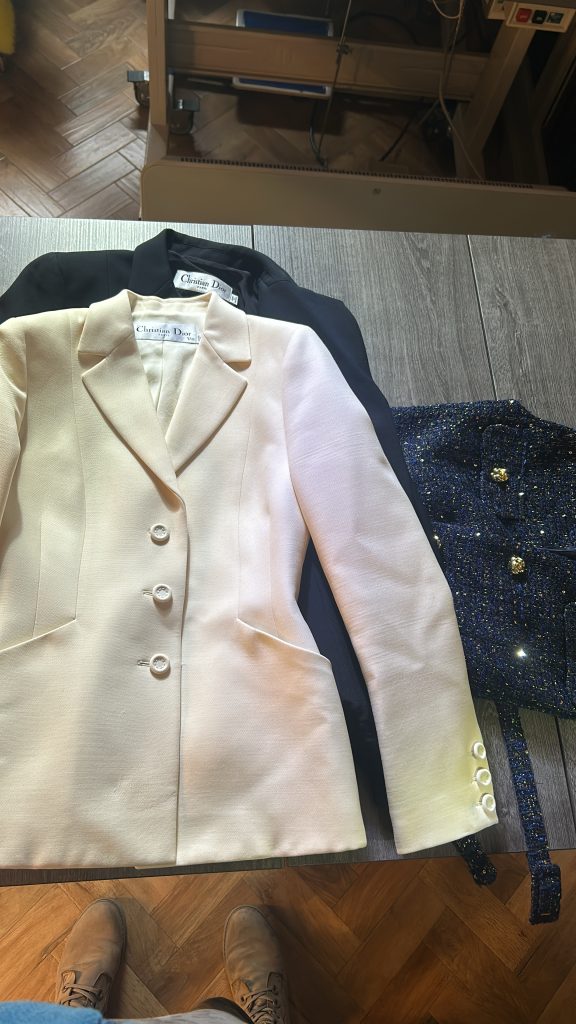
Garment Copying: Recreating a Beloved Piece of Clothing
A garment copy rebuilds a favourite piece from the original as a pattern. It is not a shortcut around design, and it is not a counterfeit of a label.
The Case for In-Home and In-Hotel Fittings
In-home and in-hotel fittings bring the atelier to you when travel, privacy or a packed schedule make a studio visit difficult.
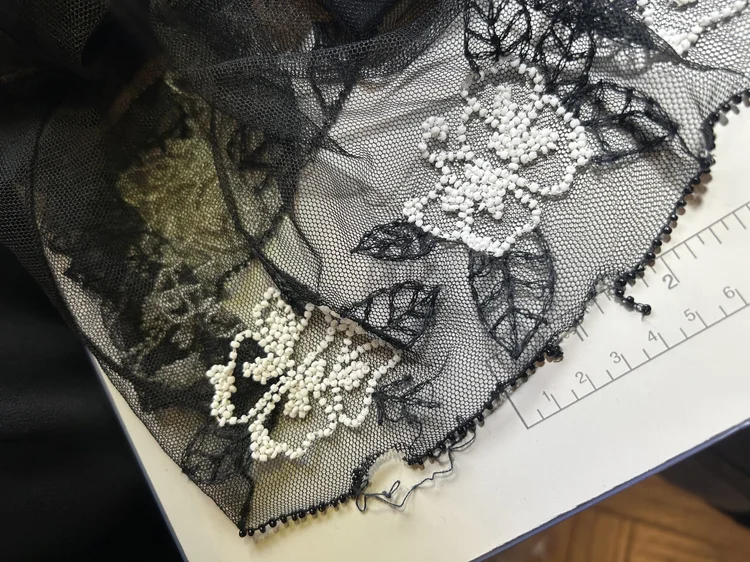
Embroidery and Beading Repairs: Restoring Delicate Details
Beading and embroidery cannot be treated like ordinary seams. Repair means matching, restabilising and sewing by hand.